

Introduction
Francis Bacon’s essay “Of Studies” is a timeless piece of advice on the value of knowledge. This “Of Studies” summary will explore its key ideas. We will break down the essay’s main points. Bacon shows us how reading and learning can improve our lives in many ways. This analysis will guide you through his powerful arguments.
Theme of the Essay
The central theme is the immense value of studies. Bacon argues that knowledge is not just for scholars. It is a practical tool for everyone. He explains how studies help us in our personal lives, our conversations, and our work. The essay shows that a balanced approach to learning is essential for personal growth.
Structure of “Of Studies”
Bacon organizes his thoughts very clearly. The essay starts with the main purposes of the study. Then, it discusses how to use knowledge correctly. He explains the different ways people view studies. Finally, he details how different subjects improve our minds. This logical flow makes his “Of Studies” summary easy to follow and understand.
Style in “Of Studies”
Bacon writes in a direct and concise style. He uses short, powerful statements called aphorisms. For example, he says, “Some books are to be tasted, others to be swallowed, and some few to be chewed and digested in his book The Essays by Francis Bacon.” This style makes his ideas memorable and impactful. His writing is formal but very clear.
Purpose: “of Studies”
Bacon categorizes three main purposes for studying. Each one serves a different part of our lives.
Delight
Studies can bring personal joy and delight. Reading a good book can be a wonderful escape. It offers comfort and private happiness when we are alone. This pleasure is one of the simplest and most profound benefits of learning.
Ornament
Knowledge serves as an ornament in conversation. It helps you speak more eloquently and thoughtfully. People who have read widely can contribute more to discussions. Their words have more weight and substance. It makes them more engaging and respected.
Ability
Studies improve our ability to handle practical matters. Knowledge helps in judgment and business decisions. A well-read person can see issues from many angles. It leads to better planning and more effective problem-solving in their daily work.
Balance in Studies: An Of Studies Summary
Bacon warns against taking studies to an extreme. A balanced approach is crucial for getting the most out of them.
Avoiding Extremes
Spending too much time on studies can lead to laziness. Using knowledge only to show off in conversation is a sign of vanity. Relying solely on books to make judgments is the habit of a foolish scholar. Real-life experience must complement what we learn from books.
Perfecting Natural Abilities
Bacon believes that studies perfect our natural abilities. Our minds are like plants that need pruning. Studies trim away our flaws and help our natural talents grow. Experience and learning must work together. Nature gives us the raw material, and studies shape it into something better.
Attitudes Toward Studies: An “Of Studies” Summary
People interpret studies in different ways. Bacon groups them into three categories. This section provides a brief (Of Studies by Francis Bacon summary) of these attitudes.
Crafty Men
Crafty or practical men often look down on studies. They think learning is not useful for real-world tasks. They see it as a waste of time. However, they fail to see how knowledge could make their work easier and more effective.
Simple Men
Simple or naive men admire studies greatly. They look up to learned people with a sense of wonder. They respect knowledge but do not understand how to use it themselves. Their admiration is genuine but passive.
Wise Men
Wise men actually use their studies. They know how to apply what they learn from books to real life. They do not just collect knowledge; they put it into practice. Wisdom comes from combining reading with practical experience. This “Of Studies analysis” shows wisdom is the ultimate goal.
Proper Uses: Specific Subjects Shape the Mind
Bacon suggests that specific subjects train the mind in specific ways. Just as physical exercises strengthen different parts of the body, different fields of study develop different mental skills. This (Of Studies summary) highlights the targeted benefits of learning other disciplines.
Approach to Reading: An Of Studies Summary
Bacon excellently categorizes books based on how we should read them. Not all books are worthy of the same amount of attention.
Tasted
Some books should only be “tasted.” It means you should read parts of them, not the whole thing. These books are less important. You can get the main idea by dipping into them here and there.
Swallowed
Other books are to be “swallowed.” You should read them completely, but without spending too much time on them. These books have value, but they don’t require deep analysis.
Chewed and Digested
Finally, a few distinct books should be “chewed and digested.” It means you must read them cautiously and with full thoughtfulness. You must think intensely about their concepts and make them your own. These are the books that truly shape your understanding.
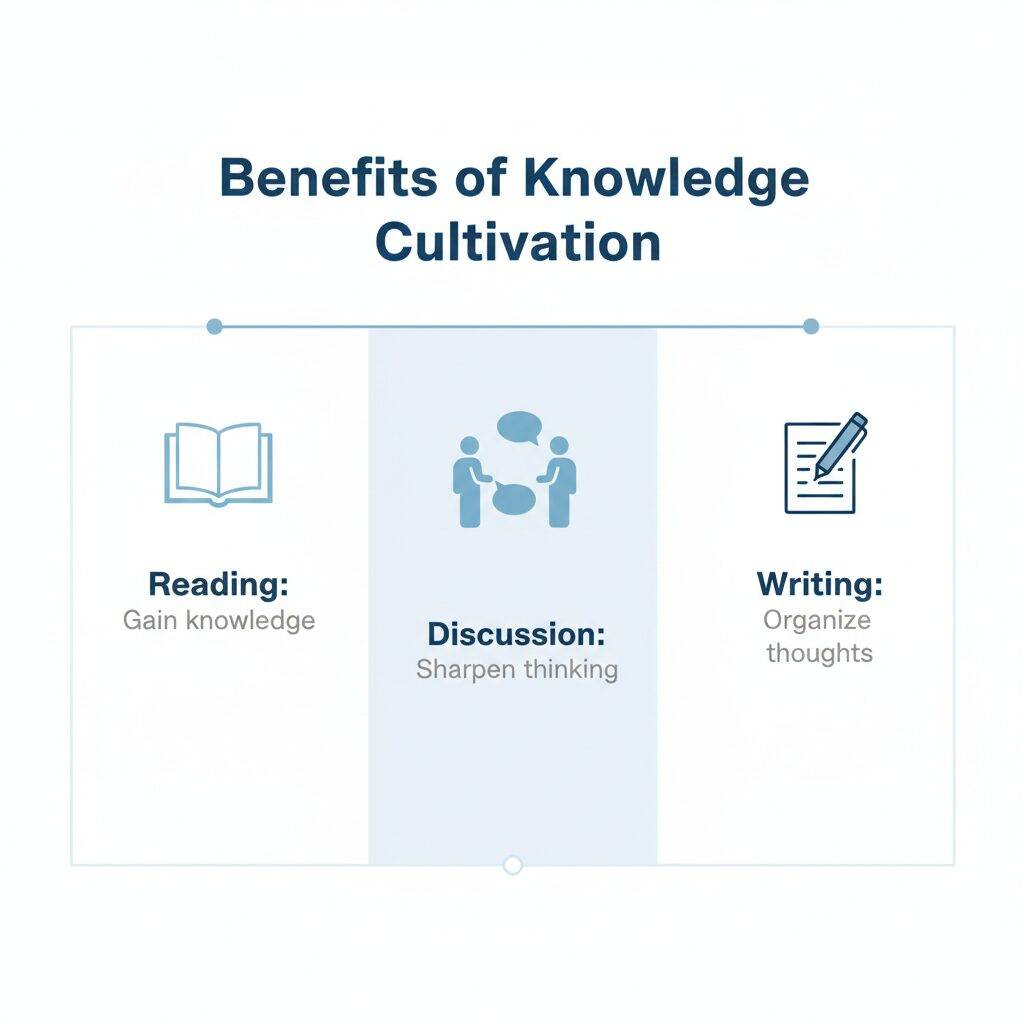
Benefits of “Of Studies”
Bacon associates three key activities—reading, discussion, and writing—with the growth of a person.
Reading
Reading makes a “full man.” It fills your mind with ideas, facts, and perspectives. A person who reads broadly has a rich base of knowledge to draw from. Reading is the foundation of all learning.
Discussion
Discussion, or “conference,” makes a “ready man.” A conversation about what you have well-read helps you think on your feet. It refines your wit and makes your knowledge manageable. You learn to evoke information swiftly and reply intelligently.
Writing
Writing makes an “exact man.” When you write, you must unite your thoughts obviously and accurately. This procedure forces you to be precise and cautious with your ideas. Writing helps you truly master a subject.
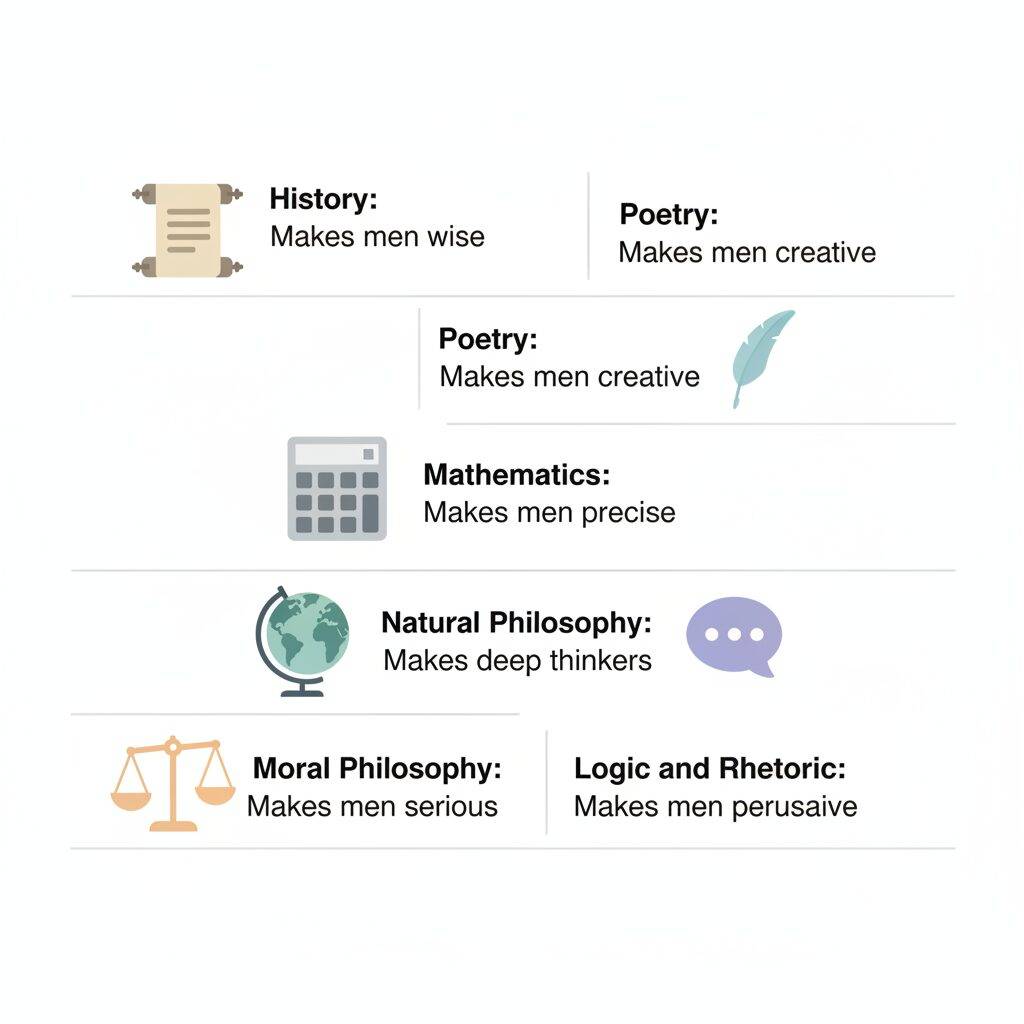
Fields of Study and Their Effects: An “Of Studies” Analysis
Bacon explains how different subjects have specific effects on the mind. It (Of Studies by Francis Bacon summary) shows his practical view of education.
History
Reading history makes men wise. By studying history, we learn from the errors and achievements of others. History provides valuable lessons that can guide our actions in the present.
Poetry
Poetry makes men witty or imaginative. It teaches creativity and the art of using language beautifully. It develops our ability to reason in abstract and imaginative ways.
Mathematics
Mathematics makes men subtle. It prepares the mind to be precise and logical. Studying math helps you follow compound arguments and handle comprehensive problems with care.
Natural Philosophy
Natural philosophy, or science, makes men deep. It inspires a deep understanding of the world around us. It teaches us to observe carefully and think about fundamental causes.
Moral Philosophy
Moral philosophy makes men grave or serious. It deals with questions of right and wrong. Studying it helps develop a strong character and a thoughtful approach to life.
Logic and Rhetoric
Logic and rhetoric make men capable of contending. These subjects demonstrate the art of dispute and persuasion. They equip you to support your ideas and debate efficiently.
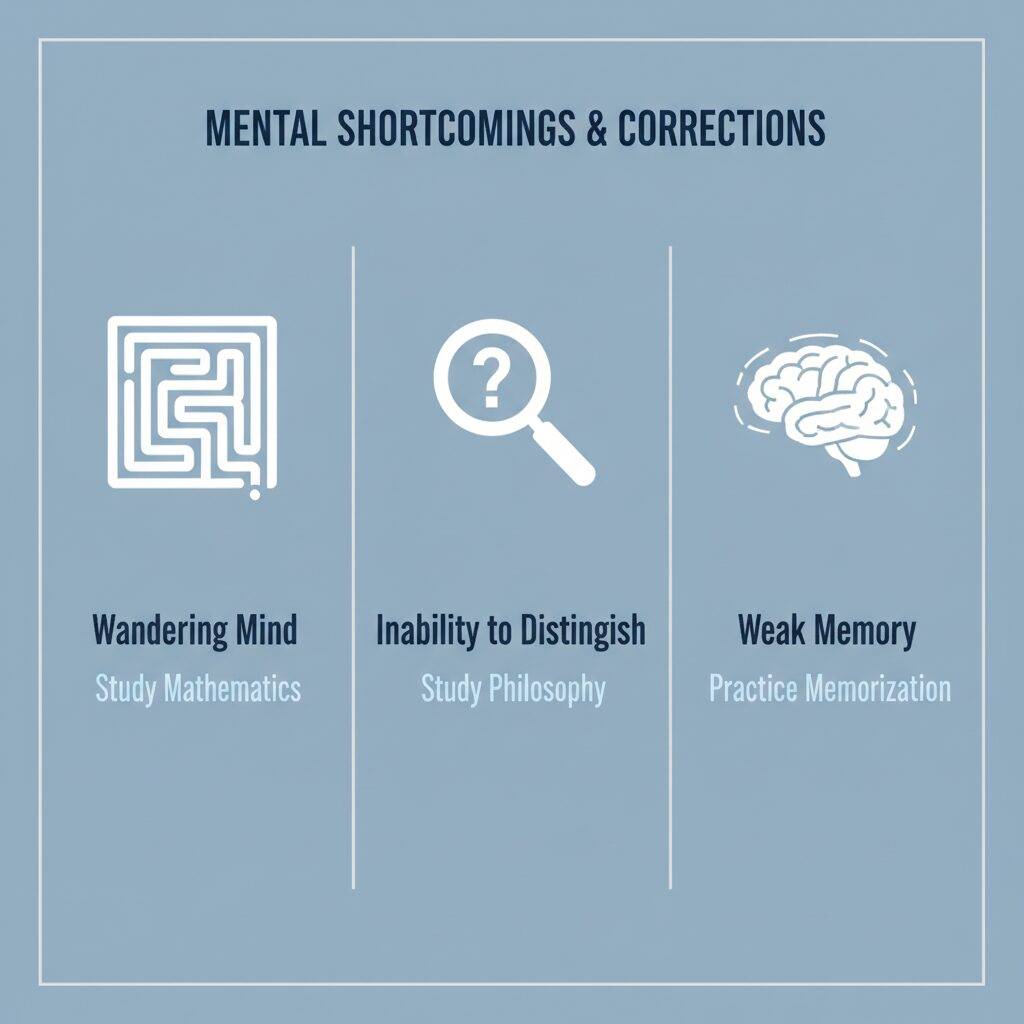
Correcting Mental Shortcomings
Bacon assumed that studies can remedy mental weaknesses, much like medicine treats physical ailments.
Wandering Mind
If your mind tends to wander, Bacon claims that studying mathematics can help—the long, detailed proofs in mathematics force you to concentrate. Following them requires continuous focus, which trains an unfocused mind.
Inability to Distinguish Differences
If you are struggling to see the small changes between things, you should study the Schoolmen. These medieval philosophers were masters of making fine distinctions. Their detailed arguments train the mind to be precise.
Weak Memory or Understanding
If you have difficulty remembering information or relating it to new situations, Bacon advises practicing law cases. Analyzing legal cases requires you to recall many details and apply principles to new facts.
Conclusion
In conclusion, this (Of Studies summary) has revealed Francis Bacon’s deep insights into the power of knowledge. He presents a stable and practical guide to learning. Studies offer delight, improve our communication, and enhance our ability to manage our affairs. He explains to us that a wise person chains reading with experience. By choosing our studies sensibly and applying them to our lives, we can sharpen our minds and become more complete individuals. Bacon’s recommendation remains as applicable today as it was centuries ago.